

When to get Checked
About Prostate Cancer
When to Get Your Prostate Checked: Age, Risk Factors, and PSA Testing
Prostate cancer often develops without noticeable symptoms. Knowing when to get your prostate checked can help you take an important step toward protecting your health.
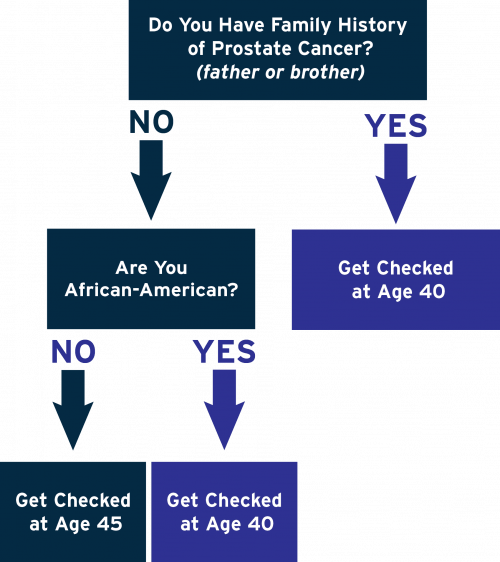
The Prostate Cancer Foundation of Chicago (PCFC) encourages men at average risk to discuss PSA screening with their doctor around age 45. Black men and men with a family history of prostate cancer should consider starting these conversations around age 40.
screening can help detect prostate cancer early, when more treatment options may be available. The right time to begin depends on your health and personal risk factors.
What Age Should You Start Getting Your Prostate Checked?
Your age is an important factor in deciding when to begin prostate cancer screening, but your overall health also plays a role.
When you reach the recommended screening age, your doctor can review your medical history and explain what a PSA test involves. You can also discuss the potential benefits and risks of screening before deciding how to proceed.
If you have never had a PSA test and are already past the recommended starting age, ask your doctor whether screening would be appropriate.
Should Men Over 70 Continue Prostate Cancer screening?
The U.S. Preventive Services Task Force recommends against routine PSA screening for men age 70 and older. However, some medical organizations support continued screening for certain older men who are in excellent health.
If you’re over 70, talk with your doctor about whether continued PSA screening makes sense for you. Your medical history and personal preferences can help guide that decision.
A Quick Guide to When You Should Get Your PSA Checked...
Who Should Consider Earlier Prostate Cancer screening?
Some men face a greater risk of developing prostate cancer and may benefit from earlier screening discussions.
Black men have a higher risk of developing prostate cancer and dying from the disease than men in many other racial groups.
A family history of prostate cancer is another important risk factor. Having a father or brother with the disease increases your risk. The risk may be greater when several relatives have been diagnosed or when cancer developed at a younger age.
Certain inherited genetic changes, including BRCA2 mutations, can also increase prostate cancer risk.
Tell your doctor about relatives who have had prostate cancer and how old they were when diagnosed.
If your family history suggests an inherited risk, your doctor may recommend genetic counseling.
Understanding these prostate cancer risk factors can help you and your doctor decide whether early prostate cancer screening is appropriate.
What Happens During a Prostate Cancer screening?
The prostate-specific antigen (PSA) blood test is the primary tool used for prostate cancer screening.
PSA is a protein produced by cells in the prostate. The test measures how much PSA is present in your blood.
Your doctor may also recommend a digital rectal exam (DRE). During this brief prostate exam, a healthcare professional inserts a gloved, lubricated finger into the rectum to feel the prostate for unusual changes.
A DRE is not routinely recommended as a standalone screening test. Neither test can confirm a prostate cancer diagnosis.
Before your PSA test, tell your doctor about any recent urinary infections or prostate inflammation. Certain medications and medical procedures can also affect PSA results.
Your healthcare provider may give you specific instructions to follow before testing.
What Does Your PSA Level Mean?
An elevated PSA level does not necessarily mean you have prostate cancer.
PSA levels can increase for several reasons. These include prostate cancer, benign prostatic hyperplasia (BPH), and prostate inflammation or infection.
There is no single PSA level that reliably rules cancer in or out. Your doctor will consider your age, medical history, and previous test results when interpreting your PSA.
If your PSA is elevated, your doctor may recommend repeating the test. This can help determine whether the increase was temporary.
Depending on the results, further evaluation may include a prostate MRI or biopsy.
Certain medications can also affect PSA levels. Finasteride and dutasteride, which are commonly used to treat an enlarged prostate, can lower PSA readings.
Tell your healthcare provider about all medications you take so your results can be interpreted correctly.
What Are Signs You Should Get Your Prostate Checked?
Early prostate cancer often causes no symptoms. However, certain changes should prompt a visit to your healthcare provider.
These may include:
- Difficulty starting urination or a weak urine stream
- Needing to urinate more frequently, especially at night
- Blood in your urine or semen
- Persistent pain in your back, hips, or pelvis
These symptoms do not always indicate prostate cancer. An enlarged prostate, urinary infection, or another condition may be responsible.
However, they should not be ignored.
If you notice these changes, contact your doctor rather than waiting for your next routine screening appointment. Your doctor can determine what testing may be needed.
How Often Should You Get Your Prostate Checked?
How often you need a prostate exam or PSA test depends on your age, health, and previous screening results.
Some men may benefit from PSA testing every one to two years. Others may need less frequent testing.
Men with higher PSA levels or certain risk factors may require closer monitoring.
Your screening schedule may also change as you get older or develop new health concerns.
Ask your healthcare provider when you should return for your next PSA test. Keeping a record of previous results can help your doctor identify changes over time.
Can You Prevent Prostate Cancer?
Researchers continue to study how genetics, environmental factors, and lifestyle choices affect prostate cancer risk.
Although no specific diet or supplement has been proven to prevent prostate cancer, healthy habits can support your overall well-being.
Maintaining a healthy weight and staying physically active are good places to start. Eating a balanced diet that includes fruits, vegetables, and whole grains can also support long-term health.
Talk with your doctor before taking medications or supplements marketed for prostate cancer prevention.
Healthy habits are valuable at every age. Regular conversations with your healthcare provider can also help you make informed decisions about screening.
Find Prostate Cancer Education and Support in Chicago
The Prostate Cancer Foundation of Chicago helps men and their families find reliable information about prostate cancer screening, diagnosis, and treatment.
PCFC also holds its own monthly prostate cancer support group at Wellness House in Hinsdale on the first Wednesday of each month.
Through its partnership with Wellness House, PCFC helps fund prostate cancer programs and sponsors a staff member dedicated to prostate cancer outreach.
Wellness House’s Prostate Cancer Programs offer additional resources, including emotional support, exercise, nutrition, and caregiver support.
If you’re unsure when to begin screening, talk with your healthcare provider. PCFC is also here to help you find trusted information and local support.